Last updated November 21, 2026
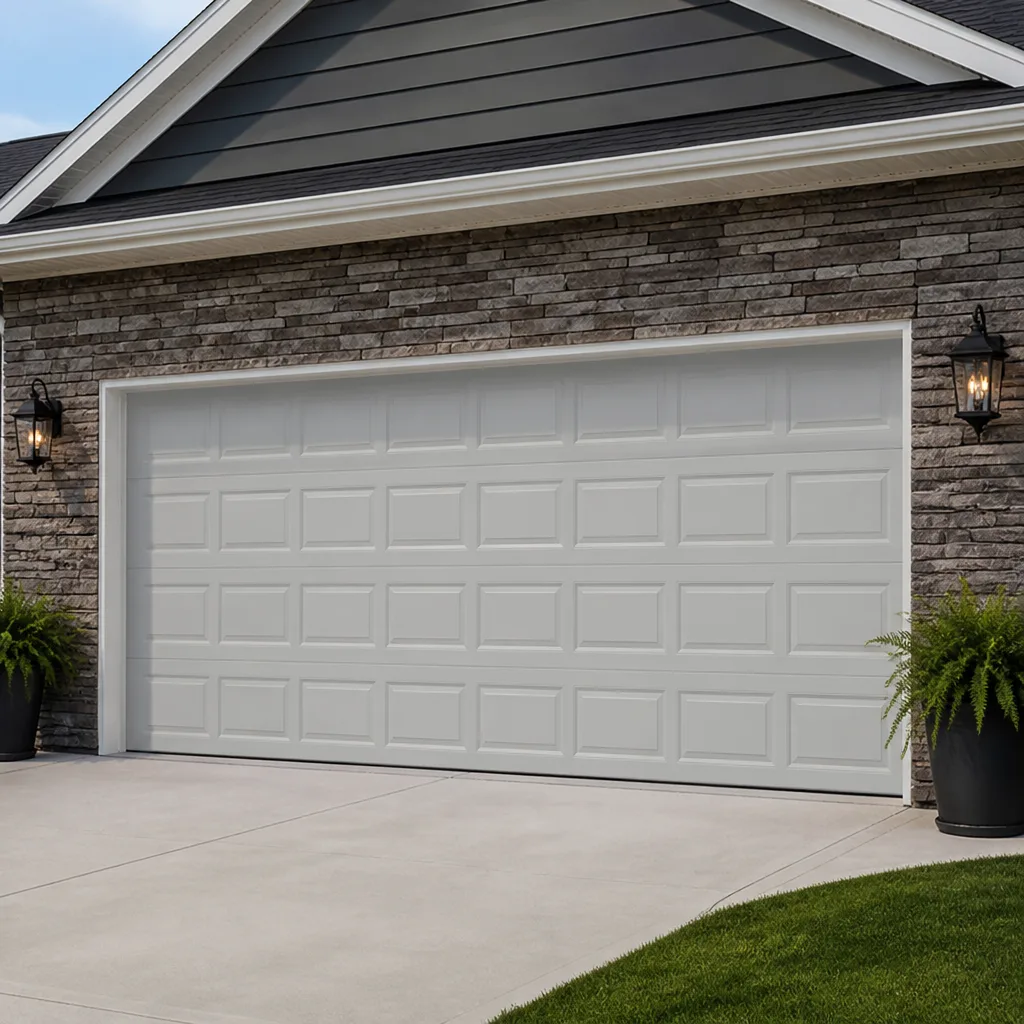 Raised-panel steel
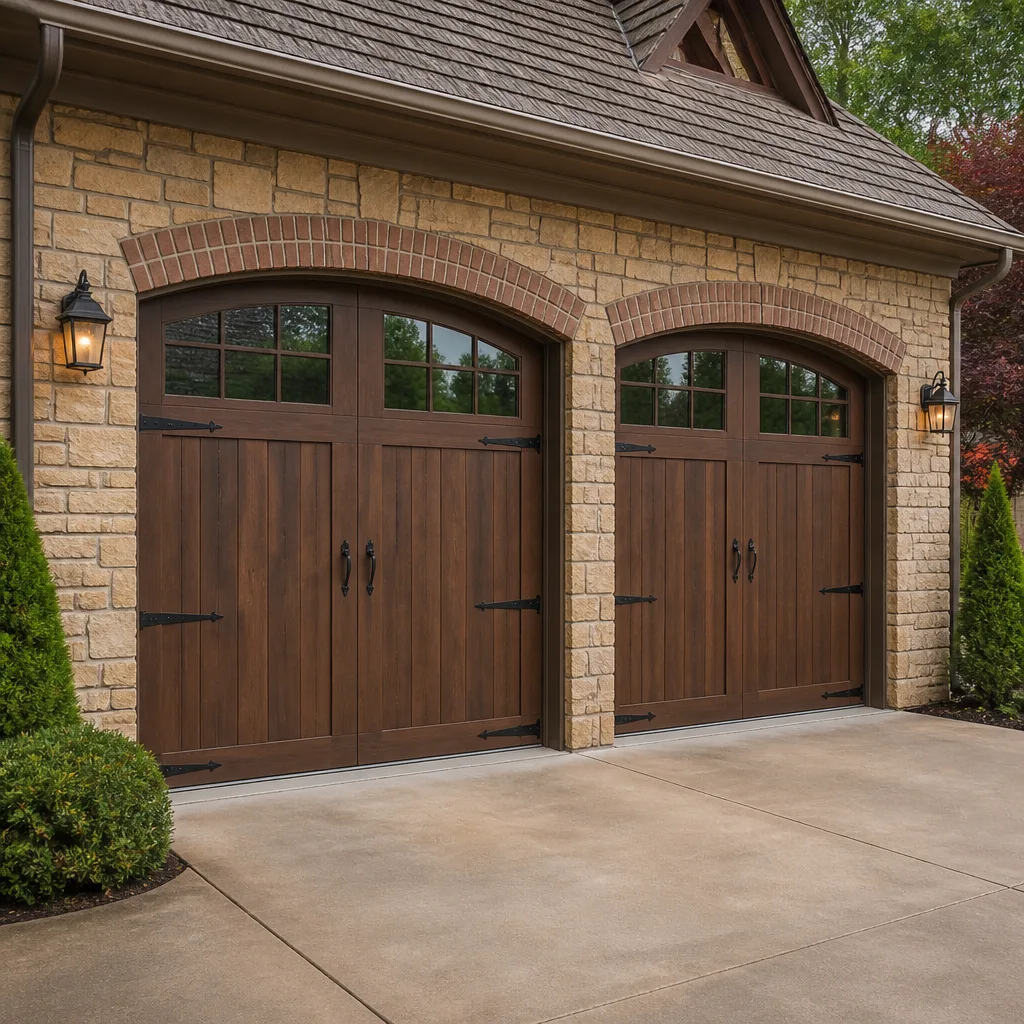 Carriage house
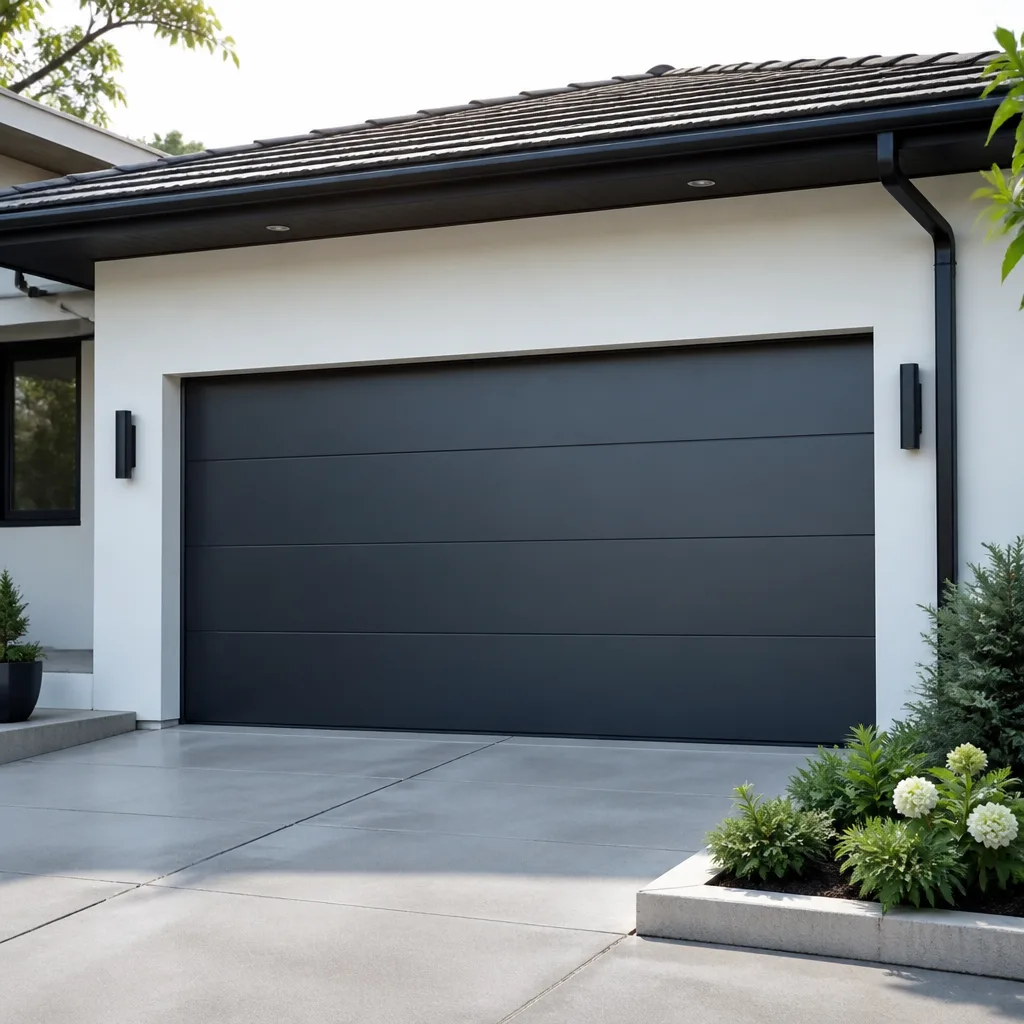 Modern flush
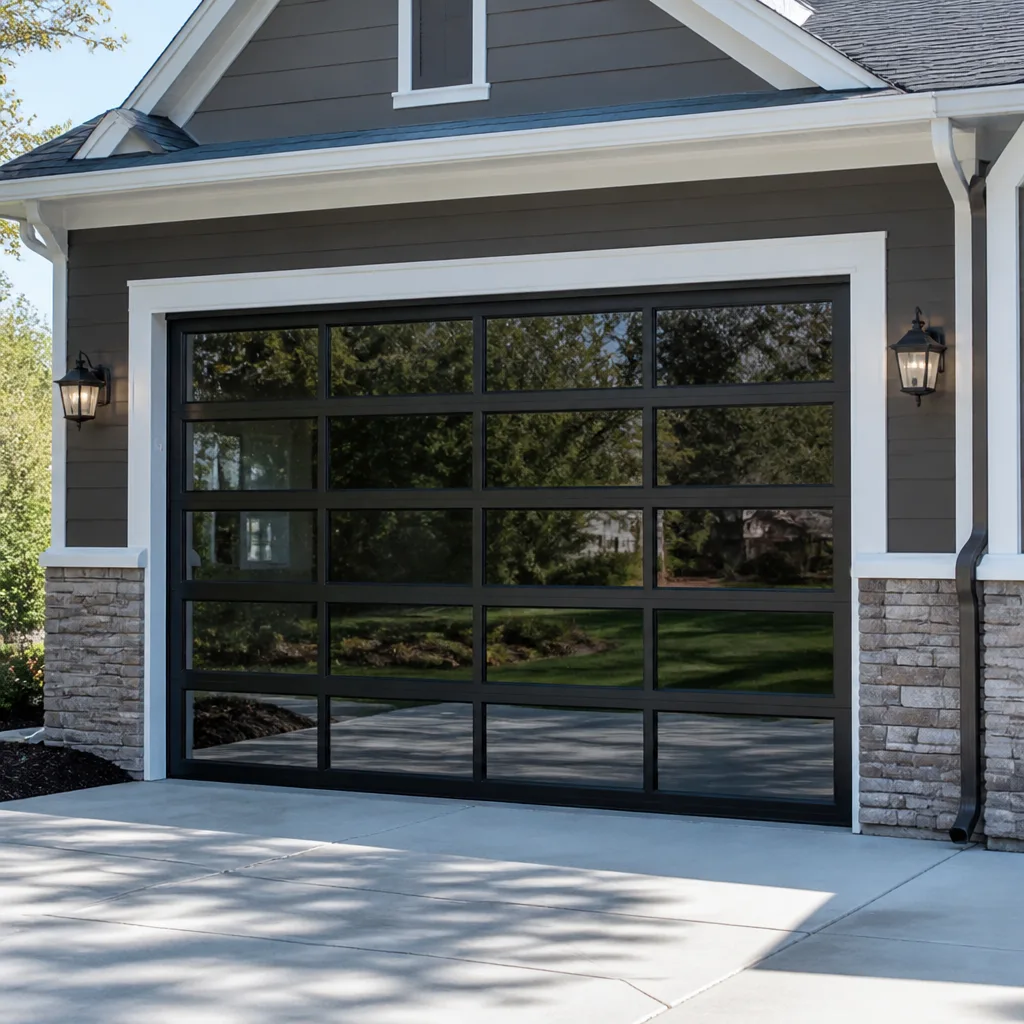 Full-view glass
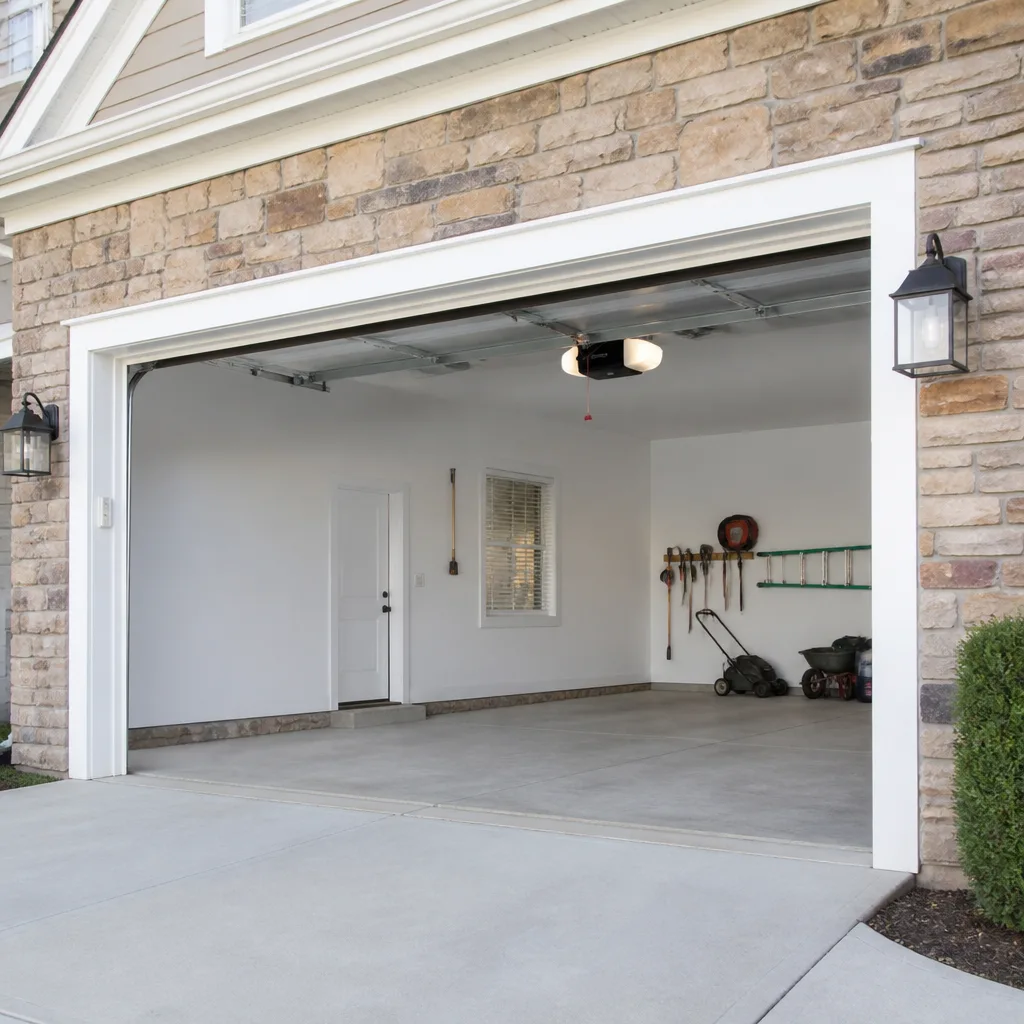 LiftMaster openers
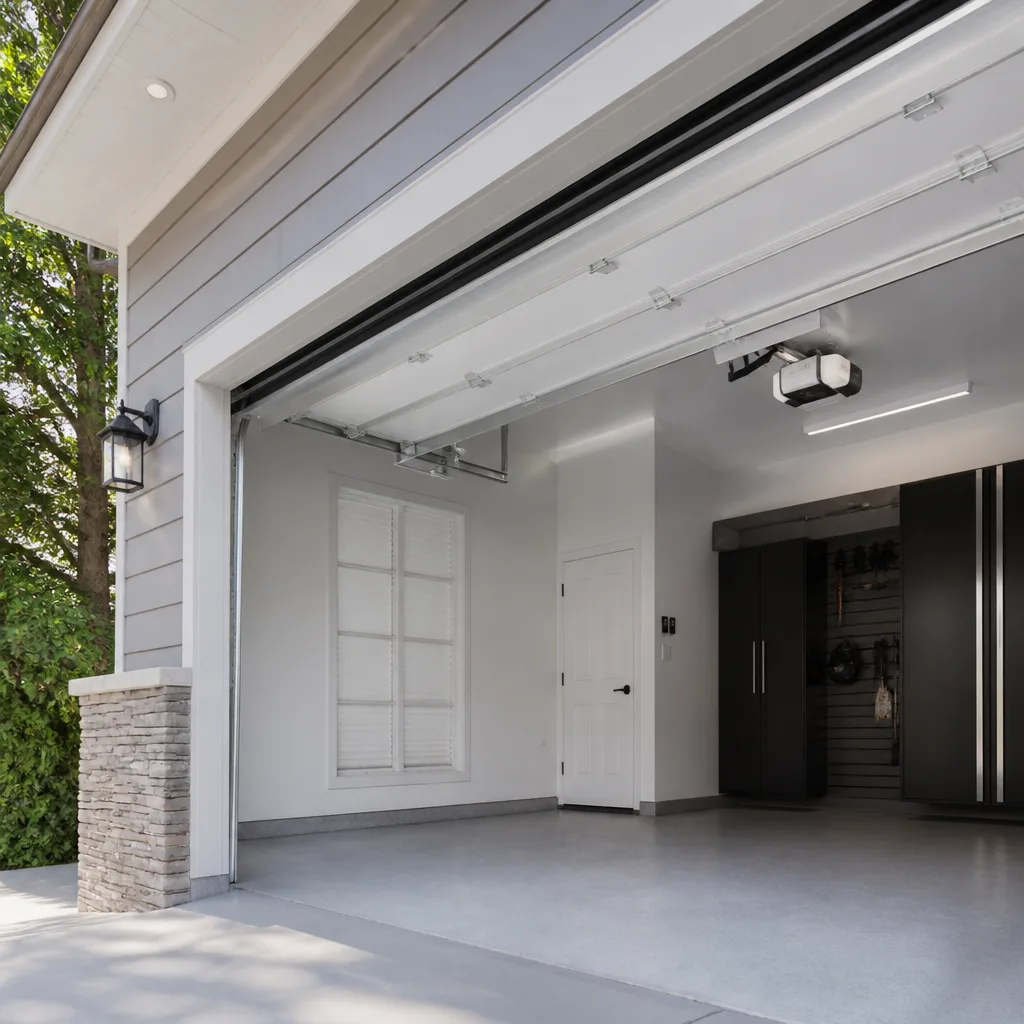 Chamberlain openers
Full 25-point door and opener safety check with every visit - springs, cables, rollers, tracks, and your LiftMaster or Chamberlain opener included
You get a price before we start. It does not change when the pro arrives.
Get your free estimateChoosing the Right Garage Door Brand: A Buyer’s Guide for Hampton
Walk into a showroom and you’ll see the same three or four names pushed hardest: the ones with the biggest ad budgets and the glossiest brochures. That’s the wrong start. In Hampton, the brand that holds up best isn’t necessarily the one you see on television. It’s the one whose hardware resists corrosion, whose wind-load options are actually available for this market, and whose parts you can still get five years down the road instead of waiting on a mail-order box. Buying on name recognition alone is a decision you’ll revisit sooner than you’d like. This guide walks through how the major brands differ on those practical points, so your shortlist reflects how you actually live with the door.
Quick Answer
The right garage door brand for most Hampton homes is one that offers corrosion-resistant steel construction, wind-load-rated options available through a regional distributor, and ready parts support across Hampton Roads. National popularity matters far less than those three factors. Clopay, Amarr, and Wayne Dalton are strong local picks for steel doors, while LiftMaster and Chamberlain openers have the deepest service and parts network here. We work on the brand you already have; the door that fits your home and your climate beats the logo that fits a billboard.
Styles & brands we work with
- Raised-panel steel
- Carriage house
- Modern flush
- Full-view glass
- LiftMaster openers
- Chamberlain openers
Table of Contents
- Why Brand Choice Matters More Than You’d Expect
- Corrosion Resistance: What Those Coatings Really Mean
- Wind-Load Certification by Brand
- Parts Availability and the Hampton Roads Service Network
- Insulation Values for Hampton’s Climate
- Openers Are a Separate Decision
- A Step-by-Step Way to Choose Your Brand
- What a Door Faces in Hampton
Why Brand Choice Matters More Than You’d Expect
The brand on the cardboard, or cut into the hinge, decides what happens to your door two to five years after installation. That’s because brand drags a whole supply chain along with it. The sections, springs, hinges, rollers and opener logic boards are all tied to a particular lineup. When something wears out, the question isn’t which brand is smartest; it’s whether that part is sitting in a regional warehouse or on a four-week backorder.
Hampton homeowners tend to buy the door once and the repairs many times. That makes long-term parts access far more valuable than a single showroom visit. A door whose hinges, cables, and torsion springs are stocked through a local distributor stays easy to keep running. A door whose components must be ordered from a single factory can sit unusable for weeks waiting on one $40 part.
There’s a safety angle too. Your garage door is your home’s largest moving part. Torsion springs, cables, and the bracket plates at either end hold enormous stored energy. Matching parts to the brand matters because a mismatched spring or a wrong-weight spring on a heavy door can stress the rest of the system, and a sudden spring or cable failure on a door carrying weight over your car or your kids is not a risk worth taking.
We’re a garage door specialist, not a generalist, and that shapes how we see this. We service eight major garage door and opener brands – LiftMaster, Chamberlain, Genie, Clopay, Amarr, Wayne Dalton, Craftsman, and Raynor – so the advice here comes from working on a lot of different hardware, not from preferring one. You aren’t choosing a badge for our benefit. You’re choosing which parts you’ll need to find at 5pm on a Sunday.
Corrosion Resistance: What Those Coatings Really Mean
Paint quality and steel prep separate the brands more than the doors themselves do. Steel doors are drawn from sheet metal, treated, primed, and finished. How well that finishing step is done decides how fast the surface shows pitting, bubbling, or failing paint at the bottom edge and around the hardware. In Hampton that matters because humidity is a constant background of the year, and the bottom panel sits close to sprinkler splash, driveway wetting, and lawn moisture.
Here’s how the coatings generally stack up across the brands you’ll see:
- Two-step finish systems (a primer plus a topcoat) are the standard, and the better brands apply them in one controlled factory line rather than leaving the field to touch up. Hot-dip and galvannealed steel prep lifts the ceiling on how well paint sticks.
- Three-coat and heavily galvanized finishes tend to show up on premium lines. These are the doors to compare if you own a home near a busy highway or want a long service life on the bottom panel.
- Wood, composite, and aluminum-with-wood-look cladding need different care. Real wood is beautiful and needs periodic sealing in this humidity. Aluminum cladding doesn’t rust the way steel can, but the finish still matters at the bottom edge.
What the ratings actually mean for coastal Virginia is simple: the number to ask about is how the finish is described (galvanized or galvannealed steel, number of coating steps), not a single made-up score. Corrosion exposure in Hampton comes mostly from moisture and road splash, not from anything exotic. A door with a good galvanized base and a factory topcoat will outlast a cheaper door with a thinner finish, no matter whose name is on it. We’re happy to tell you which finish a given model actually has, and which bottom-panel failure modes we see most often. If a door has failed at the bottom, garage door repair often restores the panel before you’d consider a full replacement.
Wind-Load Certification by Brand
Wind-load rating availability splits the market more clearly than any other factor. Not every brand offers high-wind-rated products as steel doors. Wind rating is the engineered capacity of a door to hold together under a specified wind pressure, and it’s not something you can add later. A door rated for high wind has heavier struts, reinforced hinges, and a section design tested to hold pressure.
Ask two direct questions of any brand or distributor:
- Which of your steel door models are available with a wind-load rating, and at what design pressure?
- Does the rating require a specific installation method – a reinforced header, extra jamb brackets, or a taller track – and is that included in the quote or extra?
Some manufacturers publish wind-load tables and offer rated models across their lineup. Others can only supply a rated door on one or two premium lines, or through a specific distributor who installs to the rated method. The distinction matters because a door sold as “heavy duty” but lacking a stamped rating isn’t the same product as one with actual certification.
In Hampton, storm season and wind-driven rain are real considerations for any door on an exposed face of a home. If wind rating is on your list, it narrows your shortlist quickly and it favors the brands that offer rated steel as a standard option rather than a custom build. Ask your building department about local requirements before you commit; most cities set their own rules for wind-rated assemblies and stamped documentation, and the standard is a moving target from jurisdiction to jurisdiction. We’ll tell you which brands can actually supply a rated door for your home’s opening, and which can’t.
Parts Availability and the Hampton Roads Service Network
A brand is only as good as the parts you can get for it. That’s the single biggest deciding factor we see Hampton homeowners overlook. This isn’t about preferring one name. It’s about the difference between a door that’s fixed by the end of the week and a door that’s taped shut waiting on a factory order.
Here’s how the landscape tends to sort out in Hampton Roads:
- Deep local distributor support: Clopay, Amarr, and Wayne Dalton have long-standing distribution in the region. That means common parts – hinges, rollers, springs, weather seals, track sections – are generally available through a local trade supplier, not a mail-order queue. LiftMaster openers have similar local depth for logic boards, gears, and remotes.
- Good depth but smaller regional footprint: Raynor and Craftsman make solid products, but you’ll want to confirm the specific part and model is carried regionally before buying. This is a small distinction but it’s the one that bites if a specialty component fails.
- Mail-order risk: Some brands sold mainly online or through big-box SKUs have thinner trade channels. You may have no trouble buying the door, but the parts network is thinner and every repair runs through a single source.
The service network matters as much as the part. A strong local network means a technician can diagnose the door and, in most cases, perform the fix on the same visit. That’s not a convenience point; it’s the difference between a door you use every day and a door out of service for a week. If your door won’t open at all, our garage door repair service handles the full job – springs, cables, track, panels, and hardware – so the brand’s parts network does its job in one stop, not three.
Insulation Values for Hampton’s Climate
Hampton’s climate is mild in winter and hot and humid in summer, which changes what insulation buys you. R-value measures the door’s resistance to heat flow. In a cold climate, a high R-value keeps the garage – and the room above it – warmer. In Hampton, the bigger gains from insulation are typically comfort and stability in summer, not heating savings. Where a garage is conditioned or has a living space directly above it, insulation earns its keep. Where it’s a storage bay for tools, the math is less compelling.
How the brands compare on insulation:
- R-value claims vary widely, and some are computed differently from others. Ask whether the figure is a door-level value or a section-only value.
- Polyurethane foam cores generally outperform polystyrene. Both are common in Hampton-area homes.
- Thermal breaks at the edges (the frame and the joints between sections) matter as much as the core. A foam-filled door with no thermal break still leaks heat.
Our advice for Hampton: buy insulation for comfort and quiet, not for a number on a brochure you’ll never verify. The step where you’re paying for specs you don’t need is the second or third level up the insulation ladder, where the price climbs faster than the practical benefit in this climate. If your garage is unconditioned and you don’t live above it, a solid mid-range foam core is money well spent; the top-shelf insulation spec often isn’t. We’ll help you match the door to your actual home layout.
Openers Are a Separate Decision
Door brand and opener brand are only loosely connected. You can pair a Clopay door with a LiftMaster opener, or a Wayne Dalton door with a Chamberlain, and the setup works fine as long as the opener is sized to the door’s weight. That means the opener deserves its own shortlist.
On the opener side, these are the practical comparisons:
- LiftMaster has the deepest trade channel and parts network in the region. That’s the biggest practical difference in a residential garage.
- Chamberlain is closely related to LiftMaster and shares a lot of engineering and app support, so the decision between the two often comes down to which features you want, not which will last.
- Genie makes solid openers and the product line is reliable. Confirm the motor is sized correctly for your door weight, particularly on a heavy insulated door.
- Craftsman openers are common in homes across Hampton and the parts are generally available. Service support is a phone call away.
Compatibility is another factor. Smart-home integration, app reliability, and battery backup all differ by brand and model. Newer openers built since 1993 also use safety sensors, and a mismatched opener-to-door pairing can trip those sensors repeatedly. Our garage door opener repair team handles the brand-specific fixes, including logic boards, gear kits, safety sensor alignment, and wall-control issues, so your opener’s quirks don’t become your problem.
A Step-by-Step Way to Choose Your Brand
Instead of starting with a name, start with your home and work backward. This sequence keeps you from buying the logo instead of the door:
- Check the opening and the header. Note the door width and height, the headroom, the side-room, and whether the track is standard or low-headroom. Brand availability depends on what fits.
- Decide whether you need wind rating. Check with the city building department on local requirements. If rated steel is on the table, cross any brand that can’t supply it off your list.
- Rank your finishes and coating. If paint life on the bottom panel matters to you, prioritize galvanized steel and factory-applied finish.
- Decide on insulation. If the garage is conditioned or under a living space, prioritize foam core with thermal breaks. If not, resist the upcharge.
- Choose the opener separately. Match the motor to door weight and pick a brand with local parts and service support.
- Compare quotes on the specifics. Ask for the model number, the finish spec, the insulation core, the opener model, and the parts network for the parts you’re most likely to replace.
If you’re replacing rather than repairing, our garage door installation service handles the measure, order, and fit for the brands we service. Installation is a measure-and-schedule job, not a same-day one: we’ll take the measurements, price the door and the work in writing, and book the install when the door arrives. You’ll have a written price before anything is ordered.
What a Door Faces in Hampton
A door in Hampton works hard all year. The summer is hot and humid, so a garage with no ventilation gets warm and sticky, and the door’s bottom seal and weatherstripping take the brunt of that moisture. The winter is mild, which is good news for you if you’re weighing insulation: you’ll gain comfort in summer but not dramatic heating savings.
Hampton homes vary widely – older neighborhoods, newer builds, and plenty of homes with a garage directly beneath a living space or alongside a kitchen. The door’s position matters. A door tucked under a low carriage-house overhang needs a low-headroom track and a specific opener motor. A door facing the street takes more direct sun and more visible wear. That’s the kind of thing a national ad never addresses, and it’s why we ask about your house before we recommend a brand.
If the door is failing or has already failed, our garage door repair team handles the repair and emergency calls. For a door that’s just aging and needs to be replaced, the same visit becomes a measure for a new one.
Common Mistakes to Avoid
- Choosing on advertising spend rather than coating spec. The most-advertised brand isn’t automatically the one whose finish lasts longest on the bottom panel in this humidity. Ask about the coating before the badge.
- Assuming every brand can supply a wind-rated door. Not all brands offer rated steel as a standard option. If wind rating is on your list, confirm availability before you commit to a brand.
- Skipping the parts network question. A door whose parts require a factory order can be a weekend project that becomes a month-long wait. Ask where the parts will come from when the door is three years old.
- Buying a top-tier insulation spec in a climate that doesn’t reward it. In a garage without living space above, the extra money buys little for Hampton. Match the spec to your home.
- Picking the opener on brand alone without checking door weight. An opener undersized for a heavy insulated door works harder and wears out sooner.
- Calling a generalist for spring work. Torsion and extension spring repair is one of the most hazardous jobs on a garage door. Fewer generalists will take it on, or will substitute a lighter spring to save time.
- Buying a door before you have a measure. A door bought off the shelf can fail to fit your opening, headroom, or low-clearance track. Get a proper measure first.
See the difference
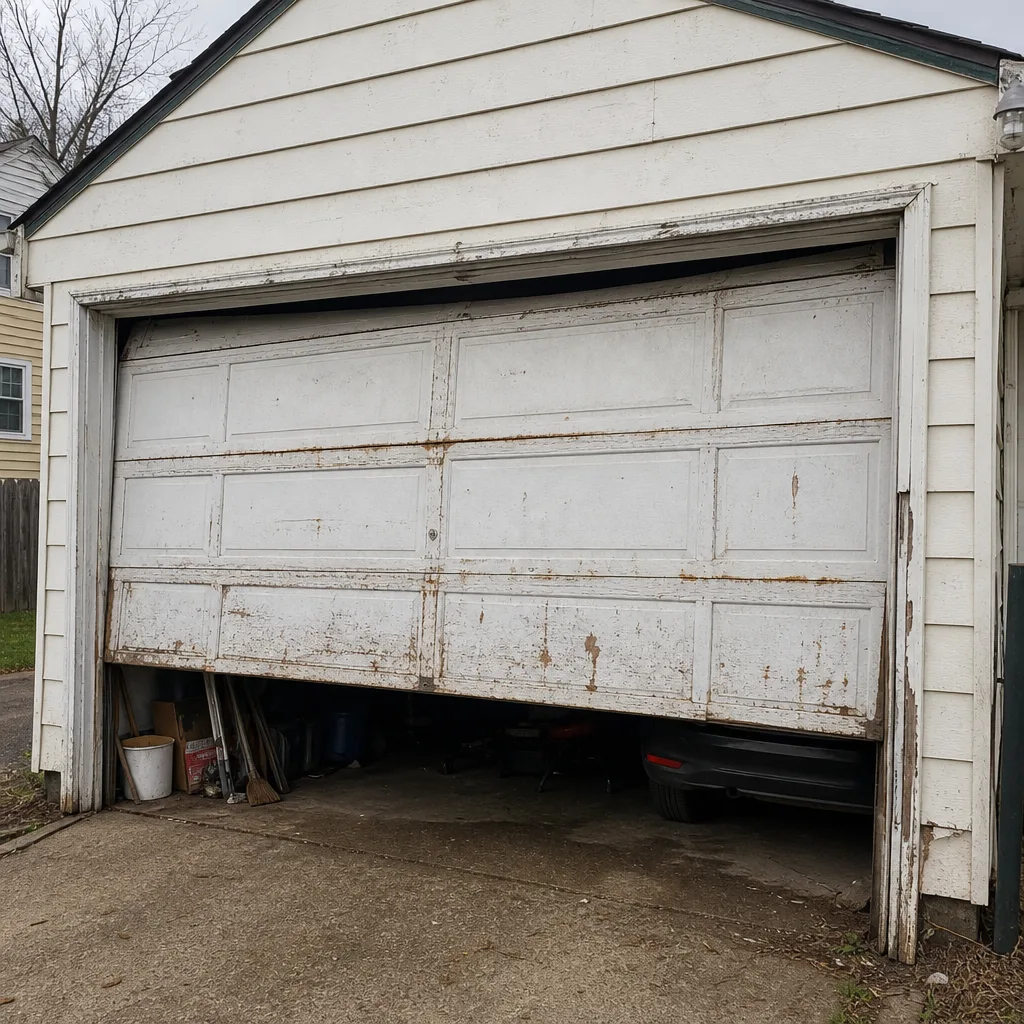 Before
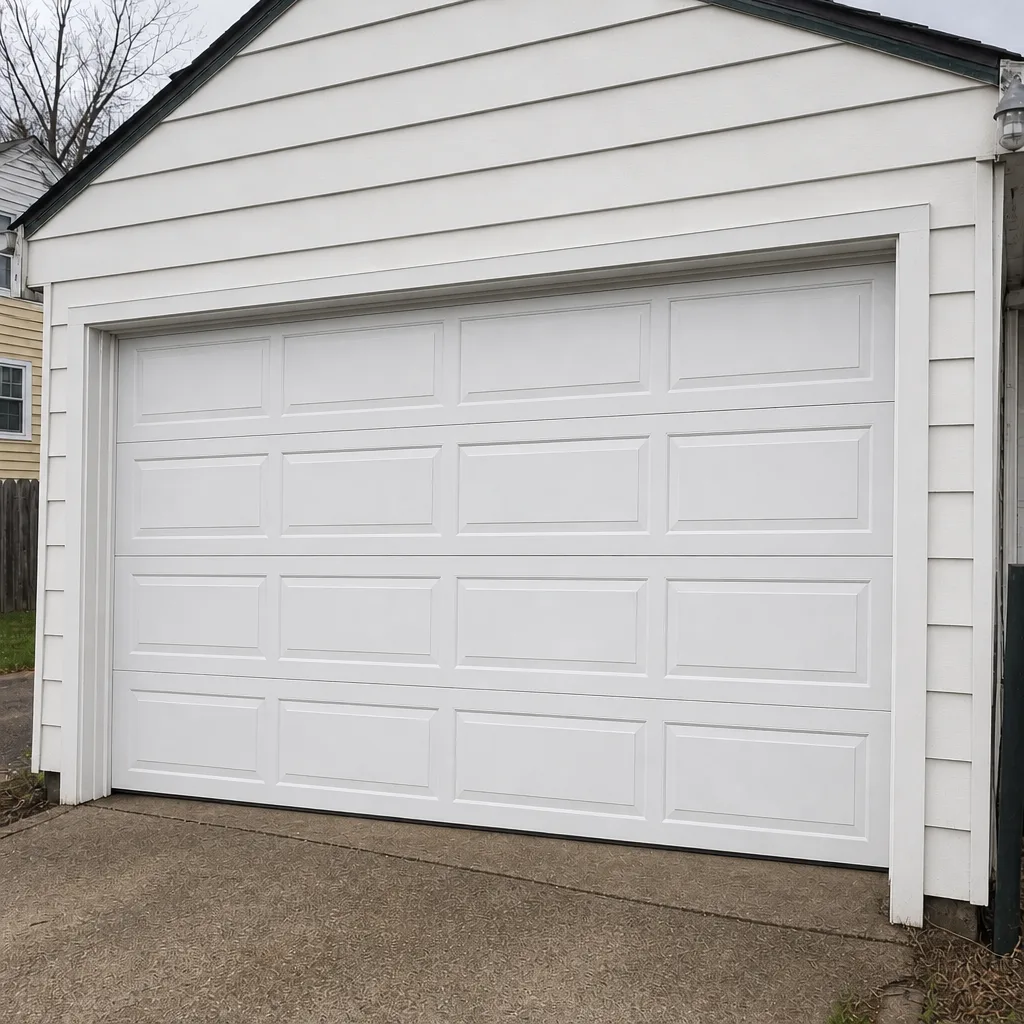 After
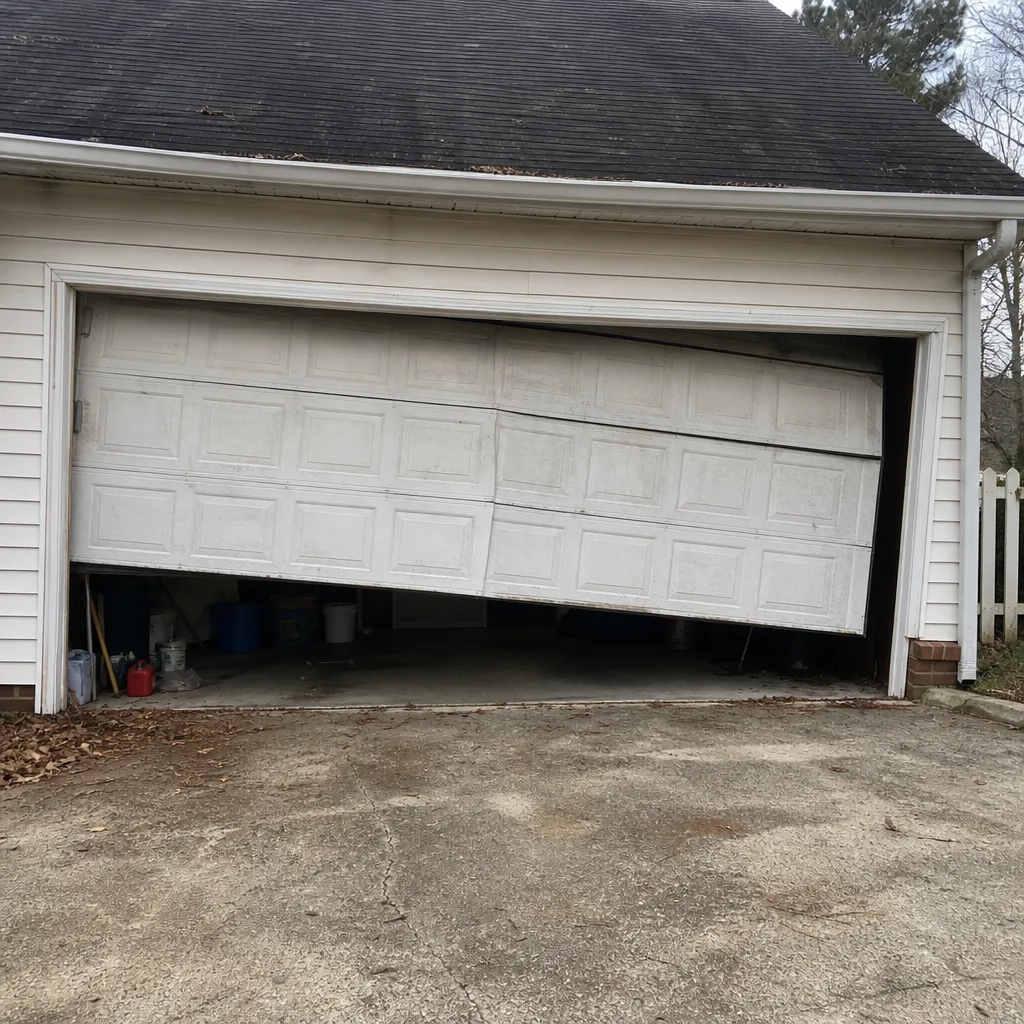 Before
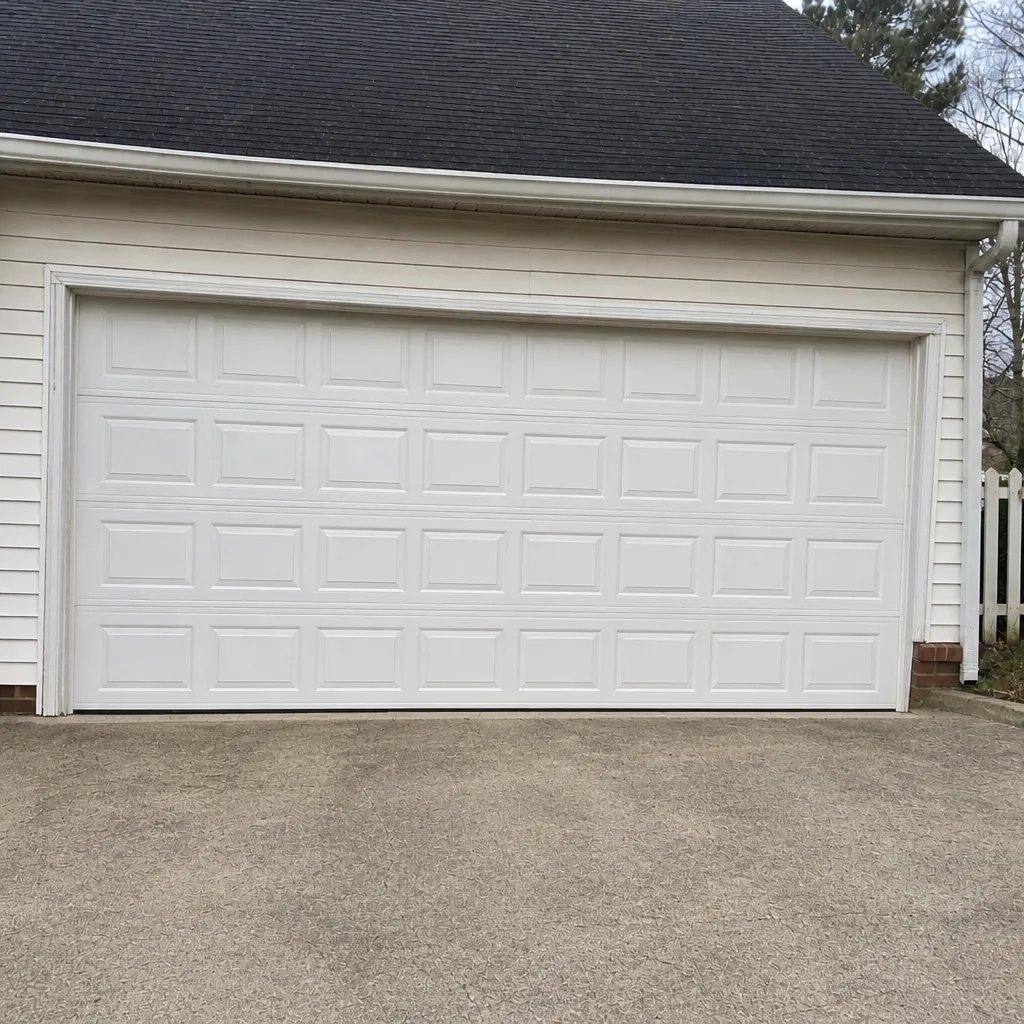 After
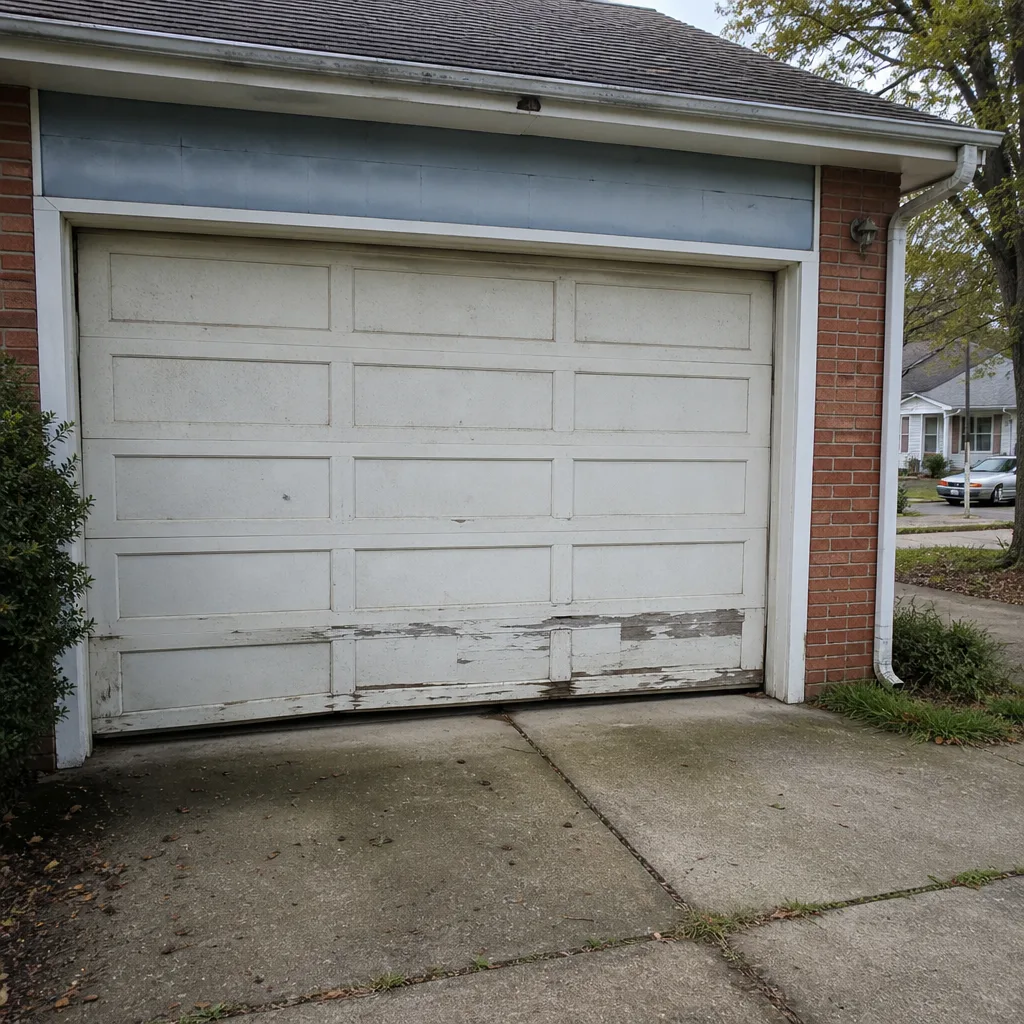 Before
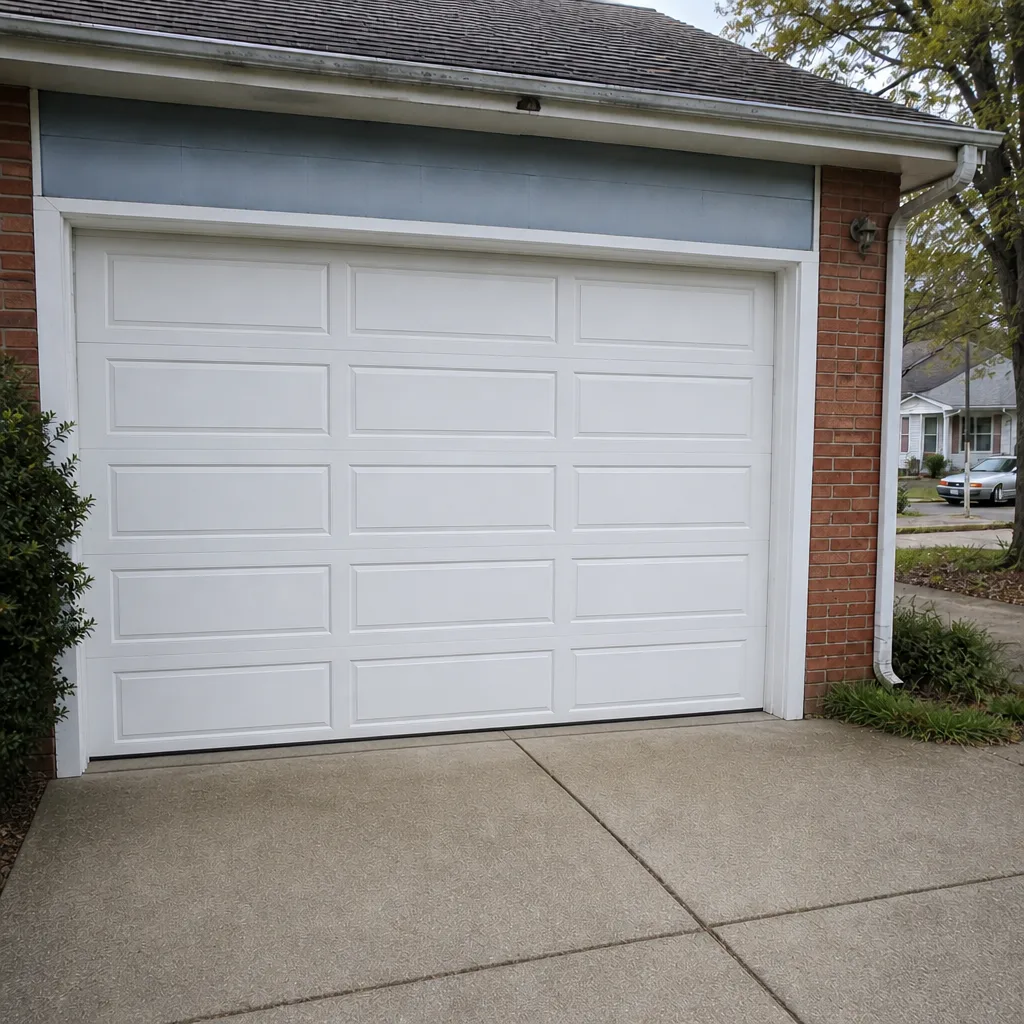 After
When to Call a Professional
We’ll tell you where the safe line is. Don’t touch the springs or cables yourself. A torsion spring is under extreme tension even at rest, and a spring that lets go while you have a hand on it can cause serious injury. The same caution applies to open electrical panels or a garage-door opener wiring job; please treat those as professional-only. If your door is off track and jammed, or a spring has visibly broken, keep people and vehicles clear and call us rather than trying to “work it” back into place. On the other hand, checking the bottom seal, the weatherstripping, the balance test (lift the door halfway manually and see if it stays), and the safety sensors are safe inspections. If a door won’t budge or a spring has snapped, that’s an emergency garage door service call. Hampton Garage Door Repair Co offers free estimates in Hampton – call (877) 600-5531.
Frequently Asked Questions
For most Hampton homes, Clopay, Amarr, and Wayne Dalton are strong picks for steel doors because they offer copper-tolerance coatings, wind-load availability, and a deep local parts network across Hampton Roads. That said, there’s no single best brand for every home; the right choice depends on your opening, insulation needs, wind rating, and parts access. We’ll tell you which brands actually fit your home before you compare prices.
Wind-load rating is strongly recommended for any garage door on an exposed side of a Hampton home, and it may be required by local building rules. Ask the city building department what applies to your area, then confirm that the brand you’re considering can supply a rated steel door and the required installation method. Not every brand can, so this is the first question to ask.
Pricing depends on the brand, the door size, insulation spec, finish, and whether wind-load rating is included. Every job is quoted per job from a free estimate, and the written estimate sets the final price – you’ll agree on the price before any work or order is placed. Call (877) 600-5531 for an exact quote.
The local professionals we connect Hampton homeowners with are vetted, and the pro performing the work is licensed and insured as Virginia requires. Our technicians have up to 11 years of experience with the brands we service. Ask for details on the specific pro’s credentials when you get an estimate.
We work on LiftMaster, Chamberlain, Genie, and Craftsman, along with the door brands we service. That means the opener service is brand-specific rather than a guess: logic boards, gears, safety sensors, wall controls, and remotes all come from the same understanding of the product. We’ll tell you which fixes are cost-effective and which aren’t.
Yes. Door brand and opener brand don’t need to match. A Clopay door with a LiftMaster opener works fine, as long as the opener is sized for the door’s weight. The pairing question is really about local parts and service support, and our team handles the compatibility and sizing for you.
The Bottom Line
Choosing a garage door brand in Hampton should come down to coating quality, wind-load availability, and long-term parts access, not which name you see in ads. Clopay, Amarr, and Wayne Dalton lead on the practical factors most local homes care about, while LiftMaster and Chamberlain lead on opener parts and service depth. Insulation matters more for comfort than for heating savings here, and a high-end spec is often money you don’t need to spend. When you’re ready to compare brands on your specific home, or your current door needs attention, call Hampton Garage Door Repair Co at (877) 600-5531 for a free estimate. We work on the brand you already have.
Written by the team at Hampton Garage Door Repair Co.